Pantanal Fishing Safari: Catch-and-Release Adventures in Brazil
By Jefferson Luiz · 5 min read
Published: Updated:
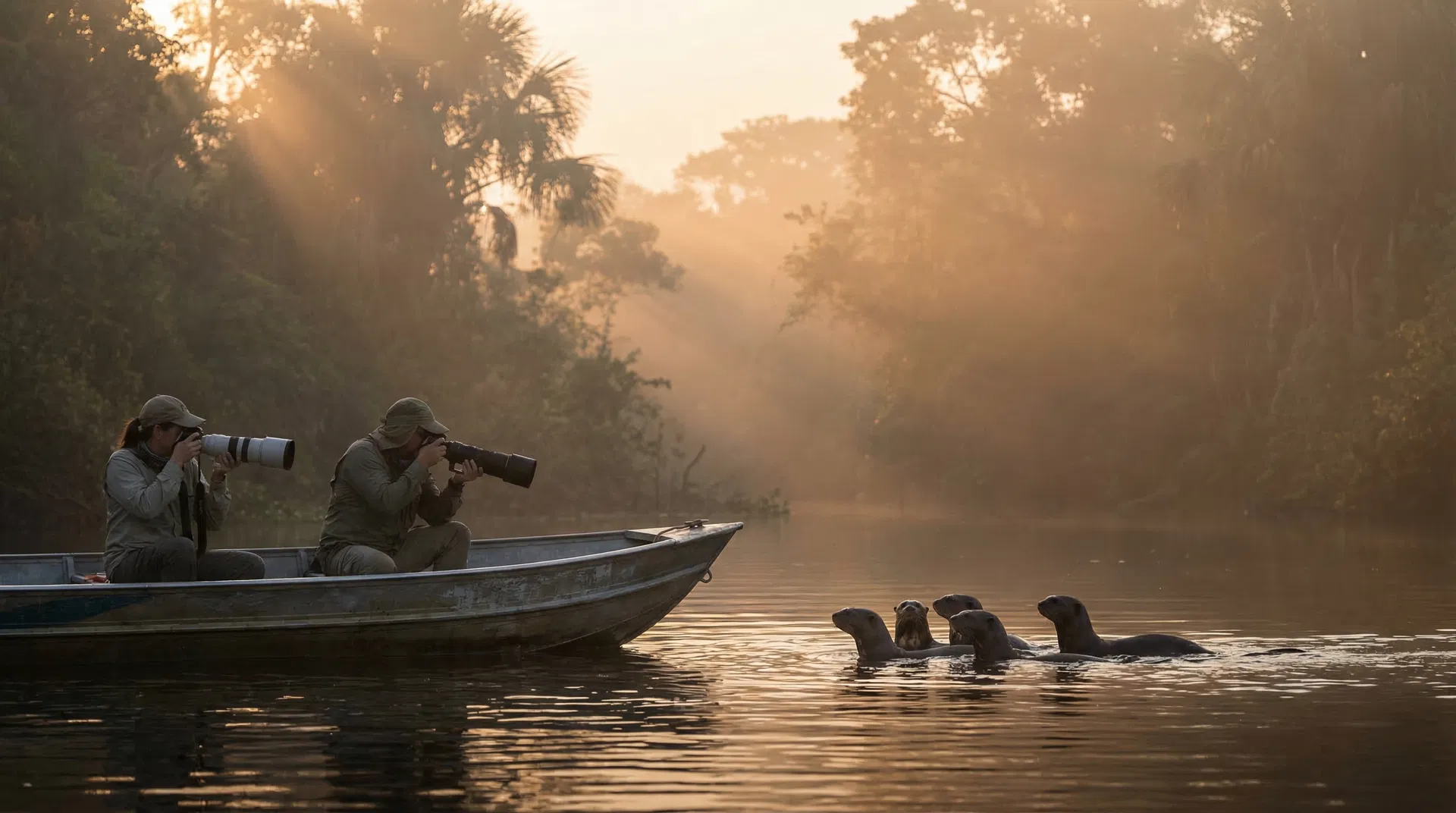
For anglers seeking a nature-focused journey, a Pantanal fishing safari combines time on the water with the landscapes and wildlife of Brazil's vast tropical wetland. The experience is not limited to catching fish: rivers, backwaters and seasonally flooded areas also provide opportunities to observe birds, caimans and mammals from a boat or riverbank.
Why fish in the Pantanal?
The Pantanal is a large floodplain shaped by an annual cycle of rising and receding water. Its rivers, channels, lagoons and backwaters support a diverse fish community and create different fishing conditions as water levels change. The character of a trip depends on the region, access route, lodge, local regulations and the time of year.
Fishing can be combined with wildlife observation. The Pantanal wildlife guide provides context for the species and habitats encountered during a safari, while a trip in the northern or southern region may offer different landscapes and logistics. Compare the main access areas through the guides to the North Pantanal and South Pantanal before choosing an itinerary.
Fish commonly sought by anglers
Golden dourado (Salminus brasiliensis)
The golden dourado is a predatory freshwater fish valued by sport anglers for its strength and fast, energetic fights. Its golden colouring and active behaviour make it one of the Pantanal's best-known fishing targets. Local guides can explain which techniques and waters are appropriate for the conditions of a particular outing.
Pintado (Pseudoplatystoma corruscans)
Pintado is a large, spotted catfish associated with the Pantanal's river systems. It is a powerful fish, and landing one requires suitable tackle, careful handling and an experienced guide. Size and availability vary, so descriptions of individual catches should not be treated as a promise for every departure.
Pacu (Piaractus mesopotamicus)
The deep-bodied pacu is another recognised target in the region. It can be found in quieter waters and offers a strong fight on appropriate tackle. Whether a species is available on a given day depends on water conditions, location and local fishing rules.
Seasonal conditions and timing
Fishing conditions often change as water levels rise and recede. In broad terms, rainfall is commonly concentrated from October to March and conditions are generally drier from April to September, but these are approximate regional patterns rather than fixed boundaries. The North and South Pantanal do not follow an identical calendar, and the timing and extent of flooding can vary from year to year and from one part of the wetland to another.
Local rain does not necessarily coincide with the peak of the flood, and transition periods can affect roads, river levels, access to channels and wildlife observation. Check current conditions and the specific itinerary with the operator before travelling. The seasonal pattern is discussed by SOS Pantanal, while Embrapa explains why flood dynamics vary spatially and hydrologically in its real-time overview of Pantanal flooding.
Catch and release as a conservation practice
Catch and release should be planned with the local operator and applicable regulations rather than assumed to be identical everywhere. Ask how fish are hooked, handled, photographed and returned to the water, and follow the guide's instructions. Using suitable tackle, minimising time out of the water and supporting responsible local operations can reduce stress on fish. The Pantanal conservation overview offers broader context on protecting the wetland and its biodiversity.
Planning a fishing safari
Access and logistics
Depending on the itinerary, travel may begin in Campo Grande, Cuiabá or another regional gateway, followed by a transfer to a lodge, river port or road-based access point. Transport, boat time, accommodation, meals, equipment and fishing permissions vary between programs. Ask for a written itinerary that identifies the starting point, transfer arrangements, included gear, guide support and what happens when weather or water conditions change.
What to pack
- Lightweight, long-sleeved clothing and trousers for sun and insect protection.
- A wide-brimmed hat, sunscreen and polarised sunglasses.
- Insect repellent and rain protection, including during drier months when showers can still occur.
- Closed, comfortable footwear suitable for wet landings and uneven paths.
- A camera and waterproof protection for equipment, documents and other valuables.
Choosing a guide or lodge
Look for experienced local guides, clear safety procedures and a transparent approach to fishing regulations and fish handling. The quality of a trip is also influenced by boat design, group size, accommodation, transfer times and the operator's ability to adapt to changing water levels. If wildlife is an important part of the journey, ask whether the program includes dedicated observation time in addition to fishing.
Wildlife beyond the fishing grounds
A fishing day can also reveal the wetland's broader fauna. Caimans are frequently associated with the region's waterways, and capybaras, giant river otters and waterbirds may be seen from the river. Learn more about Pantanal caimans and giant river otters before your trip. In areas known for jaguar observation, a fishing itinerary may also be paired with a jaguar-focused safari, but wildlife sightings are never guaranteed.
Wild animals live freely in their natural habitat, so sightings can never be guaranteed. The itinerary is designed to maximize observation opportunities according to the region, season and number of safari days.
Request an itinerary
A Pantanal fishing safari can be a rewarding way to explore Brazil's wetlands while learning about responsible angling and river ecosystems. For current route options, logistics and a program suited to your interests, contact Pantanal Brazil and request a detailed quotation.