Pantanal Safari vs. African Safari: An Honest Comparison
By Thalita Boffo · 6 min read
Published: Updated:
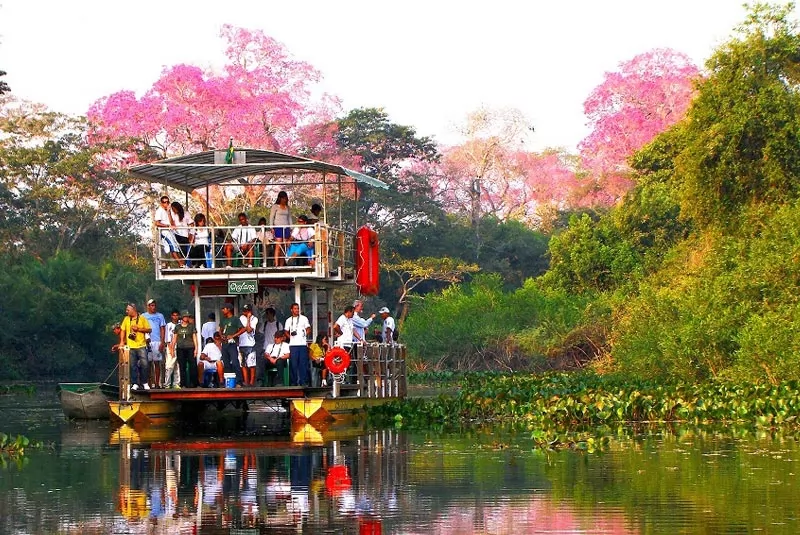
When people hear the word safari, they often picture African savannas, acacia trees and large herds moving across open plains. Africa remains a classic wildlife destination, but Brazil's Pantanal offers a very different kind of journey. This comparison looks at landscape, wildlife, pace, seasons, logistics and cost without suggesting that one destination is universally better than the other.
The Pantanal is a vast tropical wetland shaped by rivers, lagoons, grasslands and forest islands. An African safari can cover several ecosystems, depending on the country, reserve and itinerary. The right choice therefore depends on the animals you hope to see, the type of landscape you prefer and how you want to spend your days in the field.
Landscape: wetlands and waterways versus open plains
A typical African safari is primarily terrestrial. Game drives cross savannas, woodlands and other broad landscapes in search of wildlife. The scale can feel immense, with long views and the possibility of encountering several large mammal species in one protected area.
In the Pantanal, water is central to the landscape and to the way visitors explore it. Depending on the region, activities can include boat trips, vehicle safaris and walks or other guided outings. On waterways, a small boat can provide a close view of riverbanks and aquatic wildlife, while land-based excursions reveal grasslands and forest edges. Conditions change with water levels, roads and local weather, so the balance of activities depends on the itinerary and season.
For a broad introduction to the region, see our North Pantanal travel guide and South Pantanal travel guide. They help explain why two Pantanal journeys can feel different even within the same wetland.
Wildlife: jaguars and wetland specialists versus Africa's iconic mammals
African safaris are associated with the lion, leopard, elephant, rhinoceros and buffalo, often called the “Big Five.” Depending on the destination, travelers may also look for giraffes, zebras, cheetahs, antelopes and many bird species. Wildlife density and the mix of species vary considerably between parks and reserves.
The Pantanal's signature predator is the jaguar. The wetland is also known for giant otters, capybaras, tapirs, caimans and the vivid hyacinth macaw. A Pantanal jaguar guide provides more context on this species, while the guides to giant otters and hyacinth macaws cover two other characteristic sightings.
| Feature | Pantanal safari | African safari |
|---|---|---|
| Signature predator | Jaguar | Often lion, leopard or cheetah, depending on the destination |
| Characteristic wildlife | Giant otter, capybara, caiman, tapir and hyacinth macaw | Large herds and species such as elephant, rhinoceros, buffalo, giraffe and zebra, depending on the reserve |
| Typical setting | Rivers, lagoons, grasslands and forest islands | Savannas, woodlands, wetlands or other protected habitats |
| Observation style | A combination of boats and land-based outings, according to the region | Usually vehicle-based game drives, with other activities varying by destination |
Safari style: focused observation versus a broad wildlife circuit
Both destinations can offer patient, rewarding wildlife observation, but the rhythm is often different. On some African itineraries, guides cover considerable distances to search for a range of species across a large reserve. A memorable sighting may be brief, or it may develop over time, and several vehicles may gather around especially popular animals.
Pantanal outings can be more focused on river corridors and particular habitats. A guide may spend time following tracks, scanning a bank or waiting quietly near a channel. That approach can create an intimate experience, but it does not remove the uncertainty of wildlife travel. Wild animals live freely in their natural habitat, so sightings can never be guaranteed. The itinerary is designed to maximize observation opportunities according to the region, season and number of safari days.
Travelers who want to concentrate on photography can also compare the region with the options described in our wildlife photography guide. Equipment, light, boat movement and distance from animals all affect the practical experience.
Seasons and conditions
There is no single fixed “best season” for every Pantanal itinerary. Rainfall and flooding vary by year and between the North and South Pantanal. The generally wetter period is often associated with roughly October to March, while April to September is commonly drier, but these are approximate patterns rather than universal boundaries. Local rain does not always coincide with the highest flood level, and transition periods can change road conditions, river levels and animal observation.
For current planning, check the conditions in the specific region and ask how the proposed itinerary is affected. The SOS Pantanal overview describes the broad wet and dry patterns, while Embrapa explains why flood dynamics vary spatially and hydrologically. A scientific review of the Pantanal flood pulse also shows why seasonal water movement is more complex than a simple month-by-month rule. African dry seasons likewise differ between countries and ecosystems, so comparisons should be made for specific parks rather than for the whole continent.
Access, comfort and cost
Africa includes a wide range of safari models, from self-drive and budget camps to private guides, luxury lodges and charter connections. The infrastructure, distances and transfer arrangements depend on the country and reserve. The Pantanal can feel more remote and rustic, although established lodges and operators provide comfortable bases in several regions. Transfers, road conditions, boat access and the number of safari days should be considered before comparing prices.
There is no universally cheaper destination. A Pantanal trip may compare favorably with a high-end African lodge, while a particular African itinerary may be less expensive than a private, multi-day Pantanal expedition. Ask for a quote based on the exact dates, region, accommodation, transport, guide services and activities rather than relying on a general destination label. Our Pantanal packages page outlines the types of itineraries available, and the contact page is the appropriate place to request current details.
Which safari is right for you?
Choose an African safari if your priority is the classic savanna setting, the possibility of seeing a broad range of large mammals, or a route built around a particular reserve and its established safari infrastructure. Choose the Pantanal if you are drawn to wetlands, river-based exploration, jaguars, aquatic wildlife and a combination of boat and land experiences.
These destinations are not interchangeable, and neither should be treated as a guaranteed checklist. Compare the specific region, season, accommodation and number of field days. The best choice is the one that matches your interests and the conditions of the itinerary you can realistically take.