North Pantanal vs. South Pantanal: What’s the Difference and Which One Should You Visit?
By Natan Neves · 12 min read
Published: Updated:
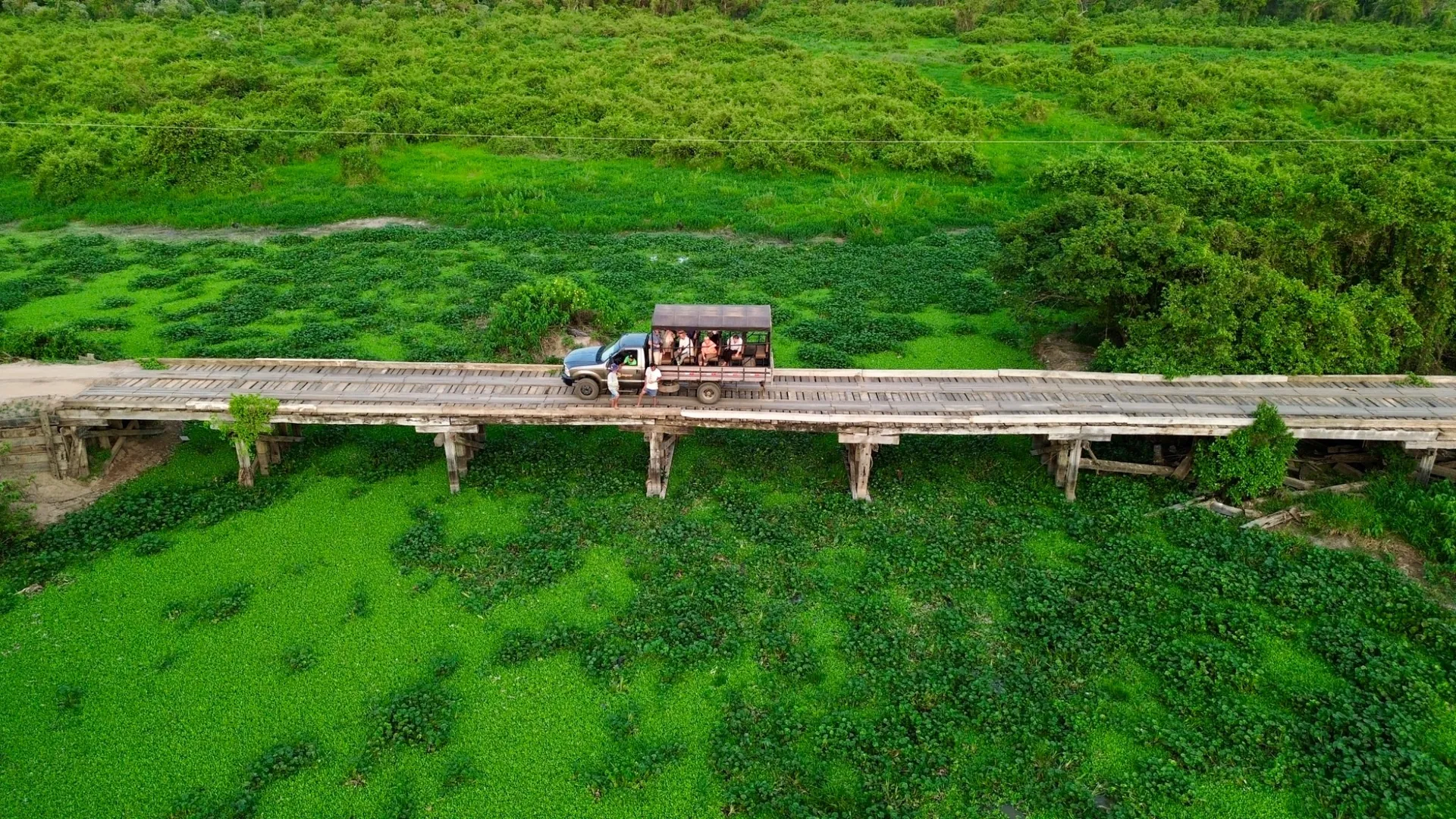
The North Pantanal vs South Pantanal decision comes down to your priorities. The north is usually the more practical choice for a trip centered on jaguars and boat safaris around Porto Jofre. The south suits travelers seeking varied land-based activities, ranch culture and a combination with Bonito. Neither is better for every visitor, and both offer rewarding wildlife photography and first-time safari experiences.
The difference between North and South Pantanal is not a division into separate biomes. The Pantanal is one vast, connected floodplain, with its Brazilian territory spanning Mato Grosso and Mato Grosso do Sul. “North” and “south” are useful administrative and travel labels within that shared ecosystem, as the Brazilian Ministry of Tourism explains. Your lodge, season and safari format matter as much as the region.
Where Is the North Pantanal?
The North Pantanal lies primarily in Mato Grosso. Cuiabá is the main arrival hub, while Poconé is an important gateway to the wetlands. From Poconé, the Transpantaneira leads through floodplain habitats to Porto Jofre, beside the Cuiabá River.
This is a northern safari circuit, not a description of every destination in Mato Grosso. Lodges along the road can emphasize birds, wetlands and mixed activities, while Porto Jofre is particularly associated with river-based jaguar observation. Explore our North Pantanal destination guide to understand that distinction.
Where Is the South Pantanal?
The South Pantanal lies primarily in Mato Grosso do Sul. Campo Grande is the principal major-airport gateway, but the wetlands themselves are reached through different routes, including Miranda, Aquidauana and Corumbá.
Traditional ranches, grasslands, woodland patches, lagoons and rivers shape many itineraries. The state tourism authority describes boat, vehicle, horseback and walking experiences, with some remote properties requiring specialized access. Our South Pantanal destination guide helps place these options in context.
How to Get to the North and South Pantanal
Northern gateways and transfers
For Pantanal tours from Cuiabá, the usual arrival airport is Marechal Rondon International Airport (CGB). It serves the Cuiabá area but is physically located in neighboring Várzea Grande, as confirmed by Centro-Oeste Airports.
The classic journey from Cuiabá to the Pantanal continues by road through Poconé and along the Transpantaneira. Your destination may be a roadside lodge or Porto Jofre. Arrange the transfer around the lodge and arrival time rather than assuming every safari starts at the road’s end.
Southern gateways and transfers
Pantanal tours from Campo Grande commonly begin at Campo Grande International Airport–Ueze Elias Zahran (CGR), identified by Aena Brasil. Road transfers then follow the route appropriate to the property.
Campo Grande is not compulsory for every southern itinerary. Corumbá International Airport (CMG) is a regional alternative for certain routes, subject to flight availability. Some lodges require onward boat travel or arranged light-aircraft transfers. Confirm the complete journey before booking flights.
Wildlife in the North Pantanal
A northern Pantanal wildlife safari can include caimans, capybaras, deer, monkeys and diverse birds, alongside searches for jaguars. Giant otters are another possible river highlight. These species are not exclusive to the north.
Habitat changes influence what is visible. Roadside pools can draw attention to waterbirds and reptiles, while riverbanks and gallery forests offer different observation opportunities. A scientific review of Pantanal wildlife and flooding explains how seasonal water levels reshape animal habitats and behavior. Allow time for this wider ecosystem rather than treating every outing solely as a jaguar search.
Wildlife in the South Pantanal
Southern itineraries can offer opportunities to look for giant anteaters, tapirs, marsh deer, caimans, capybaras and birds. These belong to the wider Pantanal fauna described by Visit Brasil. Open-country outings and woodland edges provide a different search setting from a river safari, although the habitats overlap across regions.
Jaguars also live in the south. The distinction is how visitors search for them, not whether they exist there. The property’s habitat, guide knowledge, accessible routes and activities determine the experience. When comparing South Pantanal wildlife tours, ask operators to explain their species priorities rather than relying on a generic animal checklist.
Which Pantanal Is Better for Seeing Jaguars?
For a jaguar-first trip, the north—specifically the Porto Jofre river circuit—is usually the clearest recommendation. The Ministry of Tourism identifies nearby Encontro das Águas as an important jaguar-observation area.
A Porto Jofre jaguar safari typically involves searching riverbanks and channels by boat. Southern jaguar experiences can be excellent at suitable properties, but their search methods and emphasis differ. Compare actual safari arrangements, not just the state name.
Wild animals live freely in their natural habitat, so sightings can never be guaranteed. The itinerary is designed to maximize observation opportunities according to the region, season and number of safari days.
Landscapes and Safari Experiences
Both regions contain a mosaic of aquatic and terrestrial environments. A Transpantaneira safari combines road observations with wetlands, bridges and lodge surroundings. Around Porto Jofre, rivers and wooded banks become central to the experience.
A Southern Pantanal safari often includes ranch landscapes, open fields, lagoons and woodland. Other southern routes emphasize rivers and the striking hills around Serra do Amolar. Ranch traditions belong to the wider Pantanal, not exclusively to the south; their prominence depends on the itinerary.
Boat Safaris vs. Land Safaris
Boat safaris let guides search riverbanks and waterways that cannot be explored from a vehicle. They are central to many northern jaguar-focused trips, but are also available in southern areas.
Land safaris explore tracks, grasslands and forest edges. Guided walks or horseback outings may add another perspective where offered and appropriate. They are not interchangeable with a full boat-search day.
Before choosing, ask how many outings use each format, whether activities are shared or private, and how water levels may change the program. “Boat safari” does not automatically mean “jaguar safari.”
North Pantanal vs. South Pantanal for Wildlife Photography
Choose your target species before choosing your region. For jaguar portraits and riverbank behavior, repeated boat sessions around Porto Jofre can justify a northern itinerary. For anteaters, birds, ranch scenes and broader landscape variety, a suitable southern property may fit better.
Photography also depends on time and logistics. Ask about boat stability, passenger numbers, camera storage, vehicle seating and flexibility to wait without disturbing animals. A private outing may offer more control over positioning, but cannot control wildlife.
Our Pantanal jaguar photography guide can help you prepare. Protect equipment from spray, dust and rain, whichever region you choose.
Best Time to Visit Each Region
Dry season and wildlife observation
The drier period is approximately May to October, while rain is generally concentrated from November to March, sometimes beginning in October. These are broad patterns, not fixed annual boundaries. The wildlife and flooding review describes both seasonality and substantial variation between years.
Porto Jofre jaguar trips are frequently planned for July to October, within the broader dry-season travel window. Treat that as a planning starting point, not a guarantee. Southern land-based safaris often suit drier months too, but each lodge’s access and habitats should guide the dates.
Rainfall is not the same as the flood cycle
Less rain does not mean every part of the floodplain has drained. Water arriving from upstream moves slowly and is stored across the plain. A hydrology study involving Embrapa Pantanal shows that flooding can lag rainfall, often reaching central and southern areas later, with important local differences.
Receding water can concentrate some wildlife near remaining pools and channels. Wetter conditions bring greener landscapes but may restrict roads, change river navigation and alter photographic opportunities. Heat, cold fronts, storms and exceptional drought or flooding also affect plans. Read our best time to visit the Pantanal guide, then confirm current conditions for your chosen lodge.
How Many Days Should You Spend in the Pantanal?
These are editorial planning suggestions, not universal minimums:
- General wildlife introduction: consider three to four nights at one well-chosen lodge.
- Jaguar priority: consider four to six nights, protecting several substantial safari days rather than filling the stay with transfers.
- Photography or multiple habitats: allow additional nights for patient observation and a second base.
When deciding how many days to spend in the Pantanal, separate lodge nights from usable safari time. A late arrival and early departure can make a seemingly generous itinerary feel short.
Can You Combine the Pantanal with Bonito?
Yes, especially through a southern itinerary. Bonito is in Mato Grosso do Sul, outside the Pantanal floodplain, in the Serra da Bodoquena setting. Visit Brasil’s Bonito guide describes clear-water floating and snorkeling, caves and other nature activities that complement wetland wildlife watching.
Road transfers can connect suitable southern lodges with Bonito. Regional air access is another possibility, but availability varies; do not build the trip around an assumed flight schedule. Reserve separate nights for each destination and account for transfer days. Our Pantanal and Bonito itinerary guide explores this combination.
North Pantanal vs. South Pantanal: Main Differences
This table compares common travel patterns, not every lodge. Night ranges are editorial suggestions, and month ranges require local confirmation. On smaller screens, scroll the table sideways to compare both regions.
| Criterion | North Pantanal | South Pantanal |
|---|---|---|
| Main gateway | Cuiabá; Poconé for the classic road circuit | Campo Grande; Miranda, Aquidauana or Corumbá according to route |
| Closest major airport | CGB for the classic northern circuit | CGR is the main major-airport gateway; CMG may suit some routes |
| Main access route | Poconé and the Transpantaneira toward Porto Jofre | Lodge-specific roads; sometimes boat or arranged light aircraft |
| Typical landscapes | Wetlands, roadside pools, rivers and gallery forests | Ranch grasslands, lagoons, woodland and varied river landscapes |
| Jaguar-watching opportunities | Strong river-safari focus around Porto Jofre | Jaguars present; viewing format is property-specific |
| Boat safaris | Central to Porto Jofre jaguar itineraries | Available where waterways and lodge programs allow |
| Land safaris | Road and lodge-based wildlife outings | Often prominent in ranch-based stays |
| Main wildlife highlights | Jaguars, giant otters, caimans, capybaras and birds | Anteaters, tapirs, deer, caimans, capybaras and birds |
| Photography opportunities | Riverbank wildlife and jaguar-focused sessions | Open-country wildlife, birds, landscapes and ranch scenes |
| Best months | Often July–October for Porto Jofre; broader dry window roughly May–October | Drier months roughly May–October; flood timing and access vary |
| Recommended trip duration | Three–four nights generally; four–six for jaguar priority | Three–four nights as an introduction; longer for varied habitats |
| Possibility of combining with Bonito | Possible, with additional interregional logistics | Often easier through suitable road connections |
| Best suited for | Jaguar-focused travelers and boat-safari enthusiasts | Mixed activities, ranch culture and Bonito combinations |
Which Pantanal Should You Choose?
Choose North Pantanal if jaguars are your main reason for traveling and you welcome repeated days on the river. Include a Transpantaneira lodge if you also want roadside wildlife and birding.
Choose South Pantanal if you prefer a varied program of land safaris, boating where available, horseback activities and ranch life, especially alongside Bonito.
For a first visit, either works. Consider comfort, mobility requirements, guiding language and time on boats or vehicles. The best Pantanal safari is the one whose daily activities match your interests—not the itinerary with the longest species list.
Can You Visit Both Regions?
Yes, but they are not adjacent lodge stops on one simple safari road. A combined trip requires a planned interregional transfer, often involving flights and onward lodge transport.
Give each region enough time to contribute something distinct: perhaps northern river-based jaguar searches followed by southern land safaris. On a short vacation, one carefully chosen region is usually more satisfying than rushing between both.
Frequently Asked Questions
Is the North or South Pantanal better?
Neither is universally better. The north usually fits jaguar-focused boat safaris; the south often fits mixed activities, ranch culture and Bonito. Compare the lodge and program as well as the region.
Which Pantanal is best for seeing jaguars?
Porto Jofre in the North Pantanal is a leading choice for a dedicated river-based jaguar trip. Jaguars also occur in the south, where opportunities depend on the property and observation approach.
Is the North Pantanal more expensive than the South Pantanal?
Not automatically. Cost depends on duration, lodge, transfers, shared or private arrangements, and included activities. Dedicated boats or complex access can change either itinerary’s cost. Request a personalized quotation based on equivalent inclusions.
Can I visit the Pantanal from Cuiabá?
Yes. Arrive at CGB in Várzea Grande, serving the Cuiabá area, and arrange your onward transfer. Many northern itineraries continue through Poconé and the Transpantaneira.
Can I visit the Pantanal from Campo Grande?
Yes. CGR is a principal arrival point for southern itineraries. The onward journey depends on your lodge; certain routes may instead suit Corumbá or another arranged access option.
Can I combine the South Pantanal with Bonito?
Yes. Suitable southern routes combine wetland wildlife with Bonito’s clear-water activities and caves. Bonito lies outside the floodplain, so allow separate stays and a planned transfer.
How many days do I need in the Pantanal?
As editorial guidance, consider three to four nights for an introduction, or four to six when jaguars are the priority. Check the number of actual safari days, not just the package length.
What is the best month to visit the Pantanal?
There is no single best month. July–October is a common Porto Jofre planning window. Elsewhere, match the date to your target wildlife, lodge activities and local flood conditions.
Is the Pantanal safe for international tourists?
No trip is risk-free. Use professional transport and guides, wear a life jacket on boats, and keep a respectful wildlife distance. Seek individualized medical and vaccination advice before travel. Confirm your lodge’s communication and emergency arrangements, plus appropriate travel insurance and evacuation coverage. Our Pantanal safari health and safety guide explains practical preparation.
Can I visit both the North and South Pantanal?
Yes, on a longer, carefully planned trip. Allow for interregional transport and enough safari time in each area. Avoid treating the journey between them as a quick local transfer.
Final Recommendation
Choose the north for a jaguar-centered river safari, and the south for a varied wetland experience with ranch culture and a convenient Bonito combination. Photographers should decide by target species, season and usable safari days; travelers with more time can consider both.
If you are still weighing North Pantanal or South Pantanal, contact Pantanal Brazil for help designing a personalized route around your interests, dates and preferred pace.